Microbiome Management in livestock

The biology within every production system.

A dairy herd through the transition period, a broiler flock from placement to finish, a nursery barn after weaning. Each runs on feed, water, housing and routine, and in each the feed is fermented by microbes inside the animal.

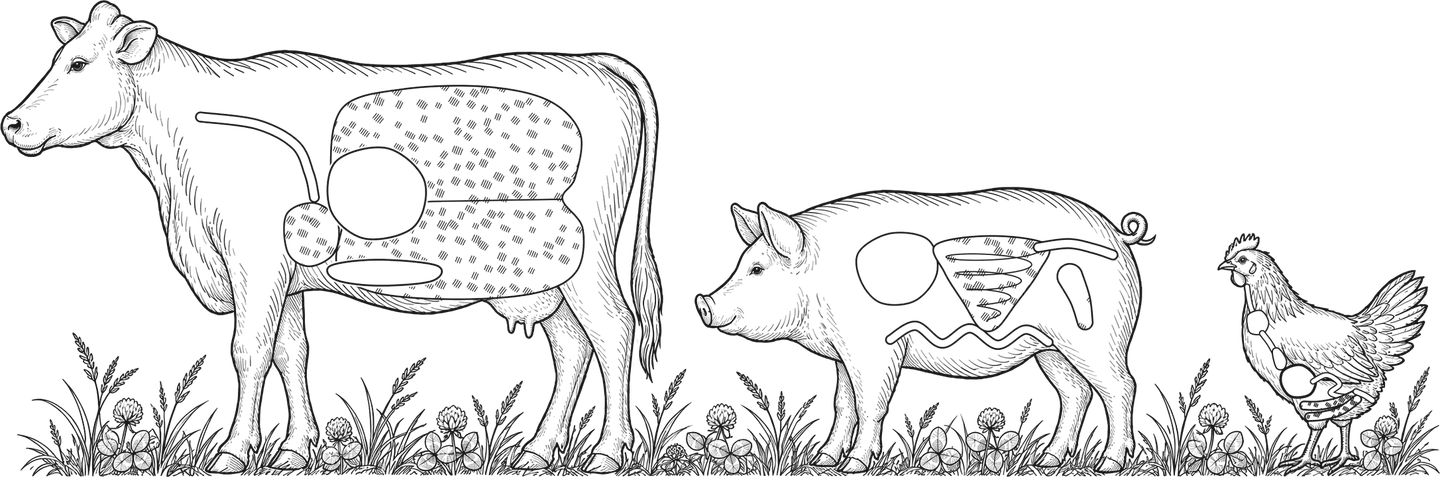
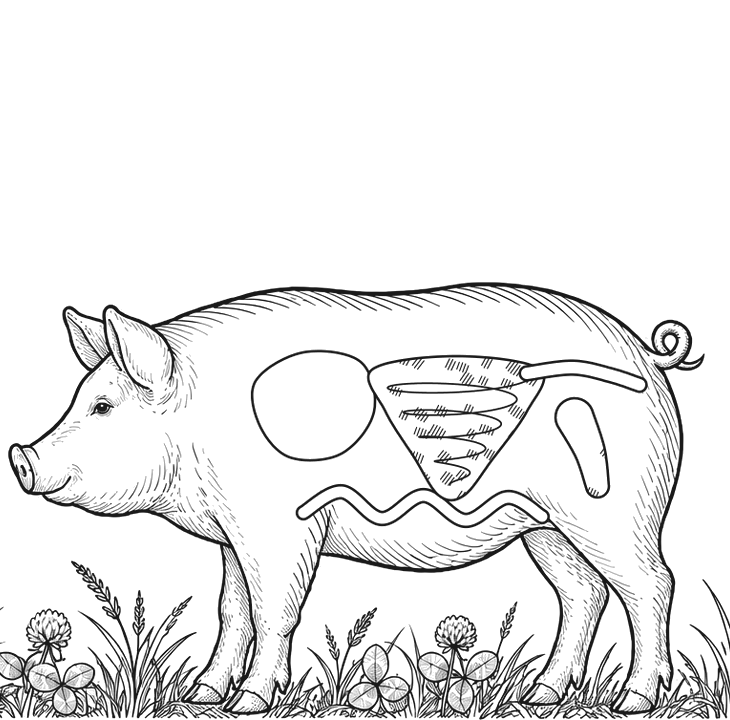
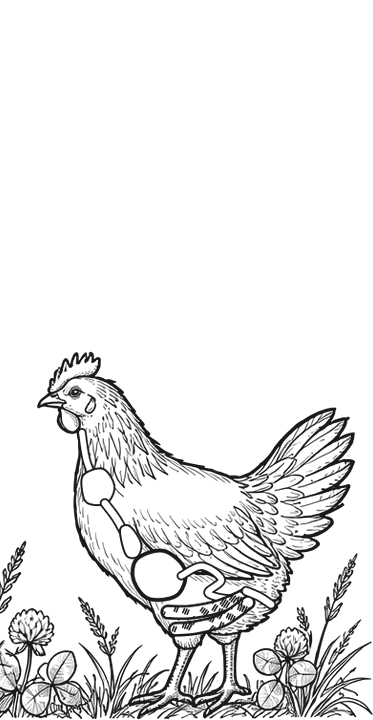
Illustration, not to scale. Crumb marks show each animal’s main fermentation chamber.

Why this setting matters

A farm is a daily routine built around feed.

Every operation manages the same few things, every day. Feed and water are also what the animal’s microbes work on, so a change in the routine is a change in their world too.

  • Feed

    The ration, the forage and every change in either.

  • Water

    Its source, its supply and how much is drunk.

  • Housing and groups

    Space, litter, air and which animals share a pen.

  • Stage of production

    Transition, weaning, placement, onset of lay.

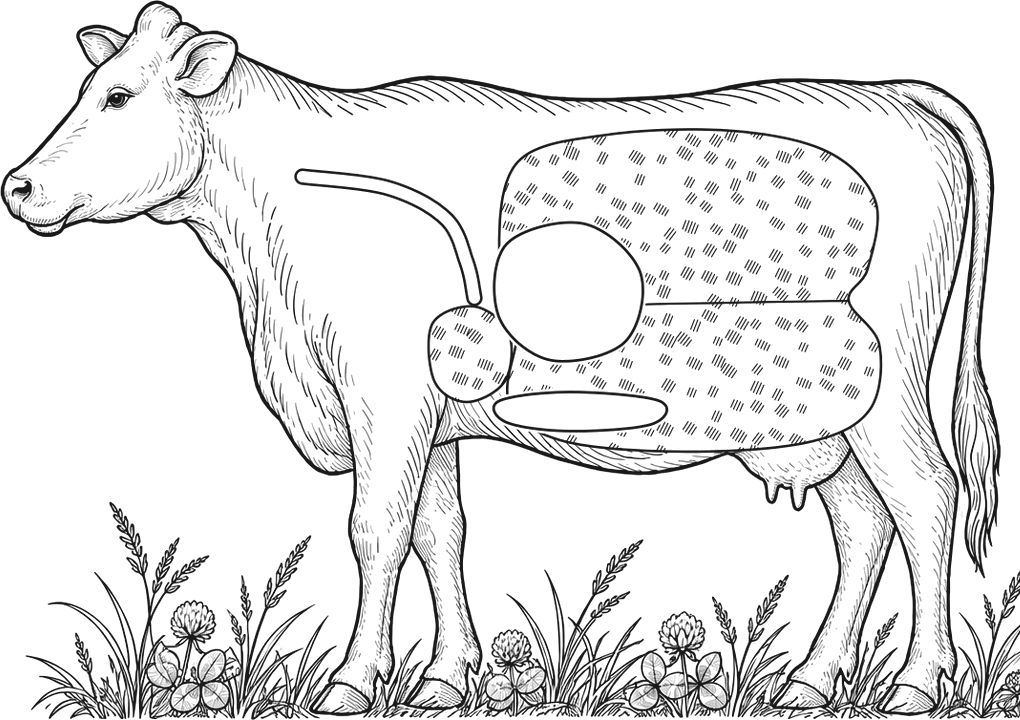
A cow grazing in a pasture of grass and clover, drawn in fine line.
Illustration. A grazing cow; not to scale.

What is happening inside

Three animals, three fermentation chambers.

Three animals, and where each one’s microbes ferment its feed: the rumen, the hindgut and the caeca.1,2,3

Environmental conditions

Resources, physical conditions and management.

Microbial activity

Functions and interactions within the community.

Observable function

What can be measured in the host or wider system.

A cow, a pig and a hen in outline with their main fermentation chambers drawn inside. Small boxes mark the cow's rumen, the pig's hindgut and the hen's caeca.
  1. Cattle: rumen

    Magnified view of the rumenThe upper wall of the rumen along the top, with a few short papillae and bacteria attached to its surface. Below, fragments of plant fibre, drawn as rows of plant cell walls, with bacteria attached along their surfaces and gathered at their torn ends, and two protozoa in the fluid between. A green tint marks the plant fibre that fibre-digesting microbes attach to and break down.abcd
    • a Rumen wall
    • b Plant fibre
    • c Bacteria
    • d Protozoa

    Observable function Manure score and body condition score

  2. Pigs: hindgut

    Magnified view of the large intestineThe colon wall along the top, lined with mucus whose inner part holds few microbes. Below, fragments of plant fibre, drawn as rows of plant cell walls, with bacteria attached along their surfaces and gathered at their torn ends. A green tint marks the plant fibre that fibre-digesting microbes attach to and break down.abcd
    • a Colon wall
    • b Plant fibre
    • c Bacteria
    • d Mucus layer

    Observable function Faecal score and average daily gain

  3. Poultry: caeca

    Magnified view of a caecumThe wall of one of the hen's two caeca along the top, lined with mucus whose inner part holds few microbes. Below, fluid and fine digesta particles, the only material the caeca take in, with bacteria attached. A green tint marks the particles that microbes attach to and ferment.abcd
    • a Caecal wall
    • b Fine digesta
    • c Bacteria
    • d Mucus layer

    Observable function Litter condition and feed conversion ratio

  1. Manure score and body condition score
  2. Faecal score and average daily gain
  3. Litter condition and feed conversion ratio
Illustration. Magnified views are conceptual and not to scale.

Why this system is investigated. In cattle, pigs and poultry the feed is fermented inside the animal, so a humic or fulvic preparation given in feed or drinking water reaches a microbial community first.

Each study in this collection is read by material, route, species, production stage and the outcome measured, because the results are mixed: in older laying hens egg weight and breakage changed while laying rate did not, the dairy results differ between reports, and none of the trials tested whether the microbial changes caused the production results.

Three separate views

The rumen, the pig’s hindgut and the hen’s caeca.

The framework asks the same questions of each animal. Where the answers are found differs, so each chamber is read on its own.

  1. Cattle

    The rumen, before the true stomach.

    Feed enters the reticulorumen, where bacteria, fungi and protozoa ferment plant cell walls the cow cannot digest with its own enzymes. The volatile fatty acids they make are absorbed through the rumen wall and used for energy.1,2

    Dairy and beef share this anatomy. Their feeding, stages and measurements differ.

    Simplified cattle digestive tractAn ordered schematic: 1, reticulum; 2, rumen, the largest compartment; 3, omasum; 4, abomasum; 5, small intestine; 6, large intestine.123456123456
    1. 1Reticulum
    2. 2Rumen
    3. 3Omasum
    4. 4Abomasum
    5. 5Small intestine
    6. 6Large intestine
  2. Pigs

    The hindgut, after the small intestine.

    Most digestion and absorption happens in the small intestine. What remains passes to the caecum and colon, where microbes ferment plant fibre and the colon absorbs water and minerals.2

    Nursery, grow and finish, and the breeding herd are different stages with different questions.

    Simplified pig digestive tractAn ordered schematic: 1, stomach; 2, small intestine; 3, caecum; 4, colon.12341234
    1. 1Stomach
    2. 2Small intestine
    3. 3Cecum
    4. 4Colon
  3. Poultry

    The caeca, two blind pouches.

    The paired caeca sit where the small and large intestines join. Coarse material that remains is fermented there, and some water is reabsorbed.3

    Broilers and layers share the anatomy. Age, cycle length and what is measured differ.

    Simplified poultry digestive tractAn ordered schematic: 1, the crop, an out-pocketing of the oesophagus; 2, proventriculus; 3, gizzard; 4, small intestine; 5, the paired caeca.1234512345
    1. 1Crop
    2. 2Proventriculus
    3. 3Gizzard
    4. 4Small intestine
    5. 5Paired ceca

Illustrations and simplified digestive anatomy. Not to scale. Relative stomach volumes in cattle follow the cited extension source.1,2,3

Production context

Different stages. Different questions.

Choose an operation. The questions, the evidence, the publications and the Fulgenix Farms link on this page change together.

Operation

Showing: All livestock

  • Dairy

    Connect feeding and management context with the observations made through the lactation cycle.

    Stages
    • Transition period
    • Early lactation
    • Established lactation
  • Beef

    Examine digestive function and adaptation across changes in feed, location and production stage.

    Stages
    • Cow and calf
    • Receiving
    • Backgrounding
    • Finishing
  • Broilers

    Consider digestive development and flock observations within a short production cycle.

    Stages
    • Placement
    • Starter
    • Grower
    • Finisher
  • Layers

    Follow the relationship between development, feeding and production through a longer laying cycle.

    Stages
    • Pullet development
    • Transfer
    • Onset and peak lay
    • Later lay
  • Swine

    Examine stage-specific questions from weaning through growth and breeding-herd management.

    Stages
    • Nursery
    • Grow and finish
    • Breeding herd and suckling piglets

These panels identify questions and measurements. They do not assert that an input improves the listed outcomes.

Digestive Stability

Follow function through changing demands.

Within livestock applications, Digestive Stability describes appropriate digestive function and the capacity to adapt through change.

The framework keeps that biological question connected to feeding, management and observations over time. Production results are evaluated alongside these conditions rather than treated as direct measurements of the microbiome.

  1. Environment

    Feed, water, housing and relevant management conditions.

  2. Function

    Digestive and microbial questions appropriate to the species and stage.

  3. Observations

    Animal, group and production records interpreted in context.

A production change can have several explanations.Establishing a particular effect or mechanism requires a suitable comparison and appropriate measurements.

What is established, and what is not

Humic and fulvic materials, tested in feed and in water.

The livestock trials in this collection gave a humic or fulvic material to poultry or dairy cows: in feed for hens, broilers and cows before calving, and in drinking water for milking cows. Each used its own preparation and dose, so each result belongs to its material, species and route.

Found in these trials

Older laying hens laid slightly heavier eggs with fewer breakages. Broilers carried fewer multidrug-resistant E. coli isolates. In dairy cows the results were mixed, and the highest dose of potassium humate gave the lowest milk yield.

Not shown by them

That the microbial changes caused the production results. That a result carries over to another species, stage, dose or route. That a tested preparation is equivalent to a commercial product.

Open questions

Which dose and route, if any, gives a consistent response. Whether feed and drinking water deliver comparable exposure. What happens in beef cattle and pigs, where this collection has no finished record yet. Whether a feed preparation lowers the methane cattle produce, which only a trial measuring methane in the animal can answer.

Selected evidence

The livestock records, with their limits.

Peer-reviewed studies come first, then the unpublished research reports. Two of the dairy reports were supplied by the manufacturer of the preparation they tested, and each card says so.

Showing all 5 records · All livestock

  • Published studyLivestock, Broilers

    Broilers fed humic substances carried fewer antimicrobial‑resistant E. coli isolates.

    Caecal E. coli counts were lower, and the share of multidrug-resistant isolates fell from 43 to 20 percent, in birds fed humic substances.

    Limitation. One trial of 40 birds per group, measuring resistance phenotypes only; pen-level clustering was not addressed.

    Funding. Slovak public research funding; the additive’s manufacturer is named in the paper.

    Study design
    Controlled feeding trial
    Material
    Leonardite-derived humic substances (at least 65 percent humic acids, 5 percent fulvic acids)
    Source
    Pipová et al., 2025. Effect of feed supplementation with humic substances on phenotypic resistance profiles of Escherichia coli isolates from the ceca of broiler chickens
    Read the evidence
  • Published studyLivestock, Dairy cattle

    Prepartum potassium humate was studied at four doses in dairy cows.

    Cows fed the two lowest doses before calving had lower NEFA and BHBA than controls; milk yield was highest at the lowest dose and lowest at the highest, the only two groups that differed.

    Limitation. One farm with about 15 cows per group; feed intake was measured on subgroups rather than individually.

    Funding. Türkiye Coal Enterprises, which also supplied the potassium humate.

    Study design
    Randomised controlled feeding trial
    Material
    Potassium humate
    Source
    Uyarlar et al., 2025. Prepartum Dietary Supplementation of Potassium Humate Improves Postpartum Lactation Performance, Metabolic Profile of Multiparous Cows, and Immune Response of Their Calves
    Read the evidence
  • Published studyLivestock, Layers

    A fulvic preparation was studied in older laying hens.

    Egg weight and shell strength rose slightly and egg breakage fell, while laying rate, feed-to-egg ratio and microbial diversity did not differ.

    Limitation. Eight weeks at one dose in one breed; the microbial measures came from six birds per group.

    Funding. Provincial and university research funding in Guangdong; no conflicts declared.

    Study design
    Randomised controlled feeding trial
    Material
    Fulvic acid from a commercial supplier
    Source
    Xiao et al., 2022. Effects of fulvic acid addition on laying performance, biochemical indices, and gut microbiota of aged hens
    Read the evidence
  • Research reportLivestock, Dairy cattle

    A follow-up dairy trial found no change in feed efficiency or milk, with shifts in milk fatty acids.

    Feed efficiency, milk yield, components and somatic cell linear score did not differ at six weeks; medium-chain milk fatty acids were higher.

    Limitation. Twelve cows per group in two groups started two weeks apart; the authors caution that group creation may explain some effects.

    Funding. Manufacturer-supplied report. Funding not stated; the report was supplied by the product’s manufacturer.

    Study design
    Controlled two-group trial
    Material
    A humic and fulvic preparation added to drinking water
    Source
    University of Guelph, Ridgetown Campus, 2024. Effect of humate substances on feed efficiency and milk production components of lactating dairy cattle
    Read the evidence
  • Research reportLivestock, Dairy cattle

    In a university dairy crossover, somatic cell linear score was lower and daily milk showed only a tendency to rise.

    Somatic cell linear score was lower with the preparation (3.45 against 4.02); daily milk showed only a tendency to rise, and fat, protein and rumination did not differ.

    Limitation. An unpublished report supplied by the manufacturer of the tested preparation, with carry-over effects noted between phases.

    Funding. Manufacturer-supplied report. Funding not stated; the report was supplied by the product’s manufacturer.

    Study design
    Crossover trial
    Material
    A humic and fulvic preparation added to drinking water
    Source
    University of Guelph, Ridgetown Campus, 2023. Effect of humate substances on milk production and components of lactating dairy cattle
    Read the evidence

In this collection. Trials in laying hens, broilers and dairy cows, each with its limits, and no finished record yet for pigs or beef cattle.

Field accounts

Kept apart from the research.

An account from a working operation can raise a useful question, but it is not a controlled comparison. None is listed yet. One will be listed here, never among the studies, and only when it documents all six of these.

Share a documented field account
  1. Species and production stage
  2. Setting and management
  3. Baseline before the change
  4. Duration
  5. Other changes made at the same time
  6. Limitations

For practitioners: what to record

What to define before a livestock evaluation, so that its result can be interpreted.

Make the comparison worth interpreting.

A useful evaluation begins with a specific question, a documented starting point and a clear definition of what will be measured.

  • Define the population

    Record species, production stage, starting conditions and relevant management history.

  • Define the intervention

    Identify the actual preparation, application, exposure period and concurrent changes.

  • Define the comparison

    Explain what the result will be compared with and why that comparison is appropriate.

  • Define the measurements

    Use consistent methods, units, time windows and meaningful outcomes.

  • Define the interpretation

    Consider alternative explanations, missing information and what the design can establish.

The unit receiving an intervention may be a pen, barn, flock or shared delivery system rather than an individual animal. Study design and analysis should reflect that arrangement.4

Where to learn or contribute

The livestock publications.

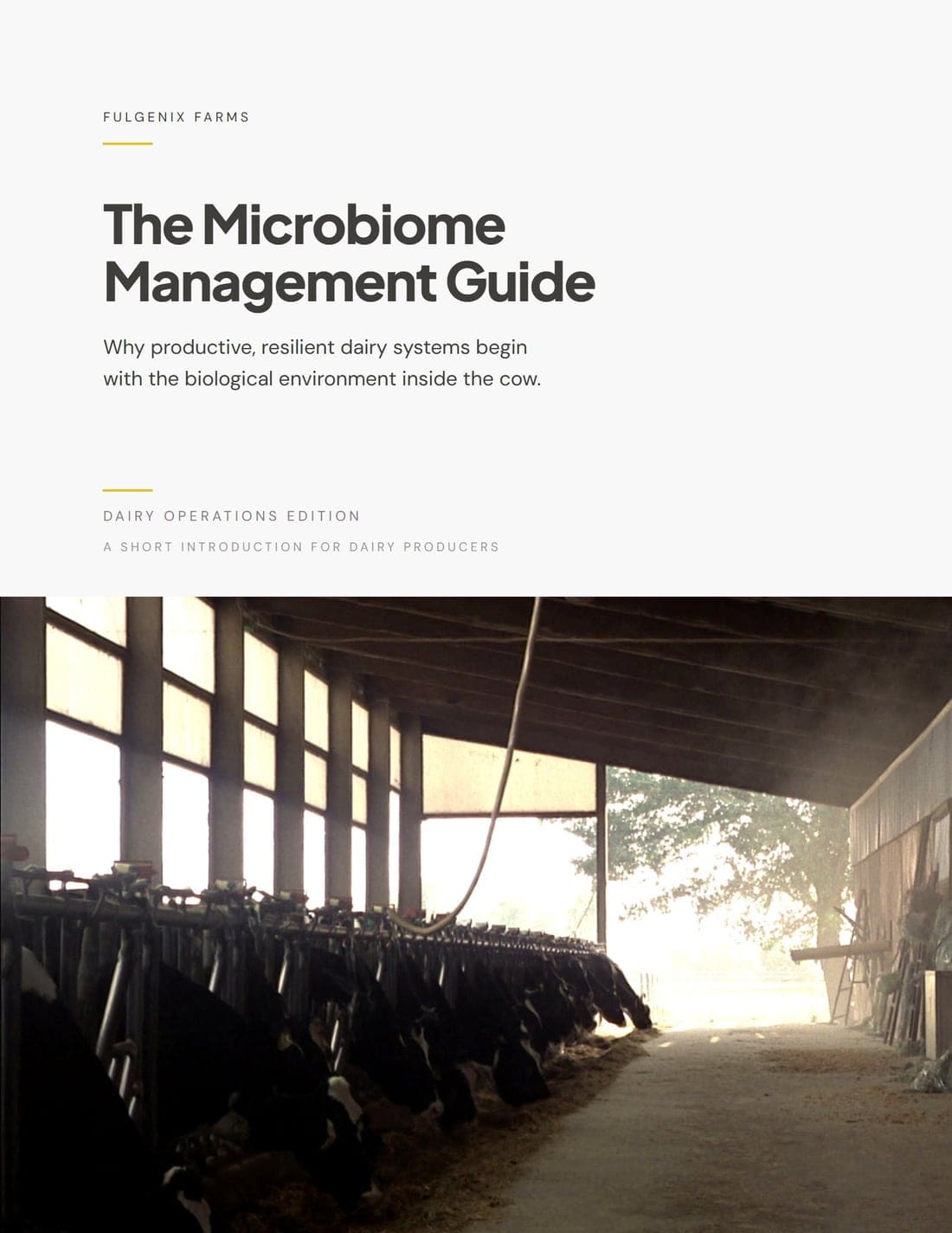
Cover of The Microbiome Management Guide, Dairy Operations Edition

Coming soon · Fulgenix Farms

The Microbiome Management Guide

Dairy Operations Edition

Why productive, resilient dairy systems begin with the biological environment inside the cow.

16 pages

Handbooks

Bring production-specific expertise to the work.

We welcome contributions from veterinarians, nutritionists, researchers and producers who can strengthen the biological explanations, evidence interpretation and evaluation methods.

Associated brand. Fulgenix Farms, run by the project’s founders, sells livestock products. Two dairy reports on this page tested a preparation from the manufacturer that makes its formulations; equivalence to a specific product is not documented.

How the project relates to its brands

Sources and further reading

  1. Mississippi State University Extension. Understanding the ruminant animal digestive system. extension.msstate.edu/publications/understanding-the-ruminant-animal-digestive-systemThe four-compartment ruminant stomach, the relative volumes drawn in the cattle schematic, and rumen microbes fermenting plant cell walls to volatile fatty acids absorbed through the rumen wall.
  2. Oregon State University. Principles of Animal Nutrition: gastrointestinal tract, digestive organs and processes. open.oregonstate.education/animalnutrition/chapter/gastrointestinal-tract/The pig's single stomach and large intestine drawn in the swine schematic; pigs and birds as hindgut fermenters of plant fibre; the rumen's bacteria, fungi and protozoa.
  3. Extension, Small and Backyard Poultry. Avian digestive system. poultry.extension.org/articles/poultry-anatomy/avian-digestive-system/The crop, proventriculus, gizzard and paired caeca drawn in the poultry schematic, and the caeca as a site of fermentation and water reabsorption.
  4. Seo S, Jeon S, Ha JK. Guidelines for experimental design and statistical analyses in animal studies submitted for publication in the Asian-Australasian Journal of Animal Sciences. Asian-Australasian Journal of Animal Sciences 31:1381 to 1386. 2018. doi.org/10.5713/ajas.18.0468Why the pen, barn or shared system can be the experimental unit.

Prepared by Carbon Biome Project; revised 22 October 2026. External scientific review of this page has not been completed. Citing university extension services does not imply their endorsement of the project.

Looking for aquaculture?

The waiting list

Join the waiting list

Leave your email and we will send it to you when it is ready.

One email when your edition is ready. Nothing else.