
Microbiome Management
Every living thing leaves something behind.
Follow what living things leave behind into the chemistry of soil and water. Explore humic and fulvic substances, their interactions with nutrients and minerals, and the microbial environments at the centre of this project.
Carbon Biome Project publishes and applies the Microbiome Management Framework, examines the research, and connects its questions across six living systems.

The living cycle
From what is left behind to what can be measured.
Life becomes organic matter.
Fallen leaves, roots and the remains of microbes and soil animals become soil organic matter. Soil animals shred a leaf; fungi and bacteria colonise the fragments.
Water and mineral surfaces shape what happens next.
In soil water, dissolved compounds settle onto clay and microbial remains attach to mineral grains. What minerals and soil crumbs shelter from decomposers is what persists.
Microbial environments connect to what can be measured.
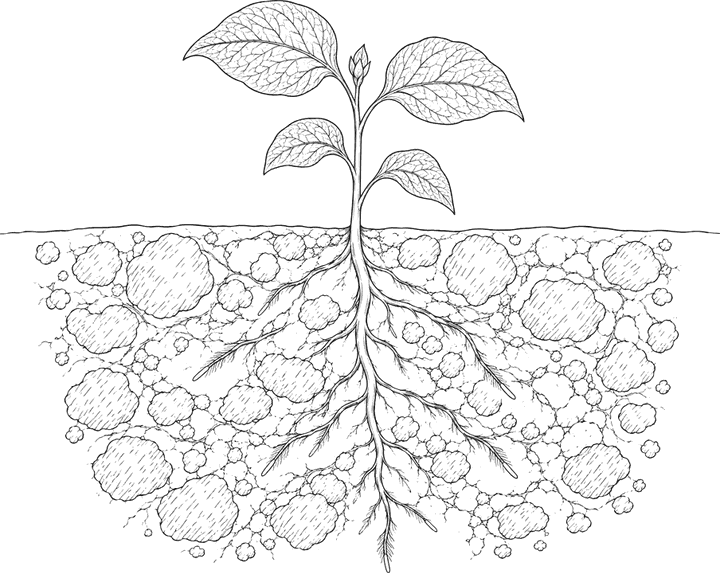
Living roots release carbon that the microbes around them feed on. The framework reads that root zone through what can be measured in the plant, such as root mass and leaf tissue.
Soil organic matter, humic and fulvic substances
The dark matter of the soil carries a charge.
Soil organic matter, the dark material in living soils, carries a negative charge. Humic and fulvic substances, the fractions a laboratory extracts from it, hold nutrients such as potassium, calcium and ammonium, a form of nitrogen, and trade them for other ions in the water around them.
Gram for gram, in near-neutral soil, soil organic matter carries more of this charge than the common clays.
Could the way they hold and trade what life needs help living systems keep their balance, or find it again? That is what the project is here to find out.
Potassium is held at charged sites.
How to read the illustration
- Humic and fulvic substances, magnified: the dark material a laboratory extracts from soil organic matter, a mix of many compounds drawn here as one stretch. Each circle with a minus sign is a negative charge on one of its acidic groups.
- b Potassium ion held at a charged site
- c Calcium ion: with two charges, it can take the place of two potassium ions
- d A group keeping its hydrogen ion, so it carries no charge
- e Ammonium ion, a form of nitrogen, held like potassium
- f Nitrate ion, a form of nitrogen: negatively charged, so the surface does not hold it and it moves on with the water
Illustration, not to scale in size or number. Near-neutral water, moving slowly down through the soil. Positive ions gather near the charged surface; nitrate is turned away and moves on with the water. One trade is shown, slowed down, then reversed when potassium in the water is in excess.
The Microbiome Management Framework
Microbes live within conditions, in the ground and in the gut.
From the living ground come the plants that feed animals and people. At a root, microbes feed on the carbon it releases; in a rumen or a hindgut, they ferment the forage the animal eats. The framework reads each place the same way: its conditions, its microbial activity, what can be measured.
Environmental conditions
Resources, physical conditions and management.
Microbial activity
Functions and interactions within the community.
Observable function
What can be measured in the host or wider system.

Soil & plants
- a Root
- b Root exudates
- c Bacteria
- d Hyphae
- e Aggregate
Observable function Root mass and leaf tissue analysis
Animals
- a Rumen wall
- b Plant fibre
- c Bacteria
- d Protozoa
Observable function Manure score and body condition score
People
- a Colon wall
- b Plant fibre
- c Bacteria
- d Mucus layer
Observable function Stool form and gut transit time
- Root mass and leaf tissue analysis
- Manure score and body condition score
- Stool form and gut transit time
Microbiome Management begins with the conditions in which microbial communities function. In digestive systems, the goal is Digestive Stability: appropriate digestive function and the capacity to adapt through change. The project investigates where humic and fulvic materials can contribute, and how that contribution can be measured. Finding out is why this project exists.
Living systems
One ground. Six living systems.
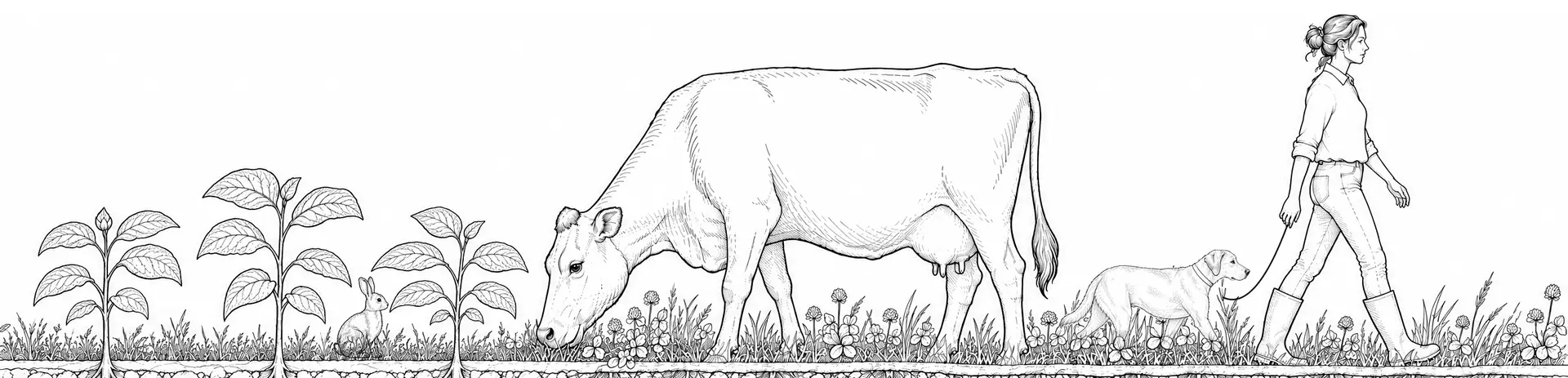
Each system is a place where microbes work within conditions: a root zone, a rumen, a hindgut, a trout’s gut, a human colon. The biology and the evidence are specific to each.
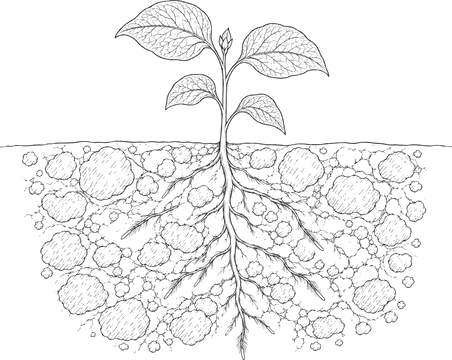
Soil & plants
The most studied system. Across 81 studies, humic substances raised early plant growth on average, with wide variation; field trials range from small gains to none.
Explore soil & plants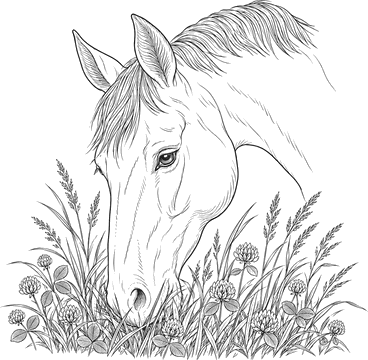
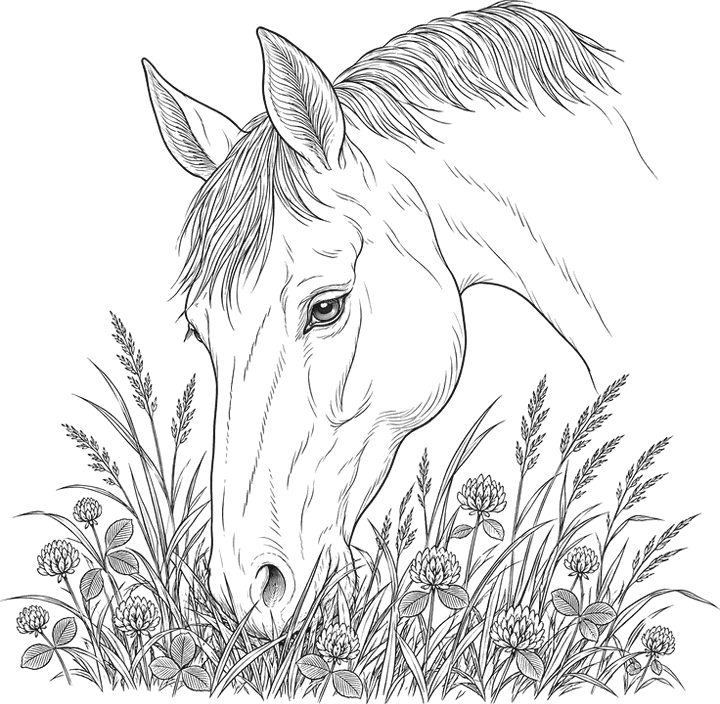
Horses
A caecum about three times the volume of the stomach, where microbes ferment the forage the horse eats.
Explore horses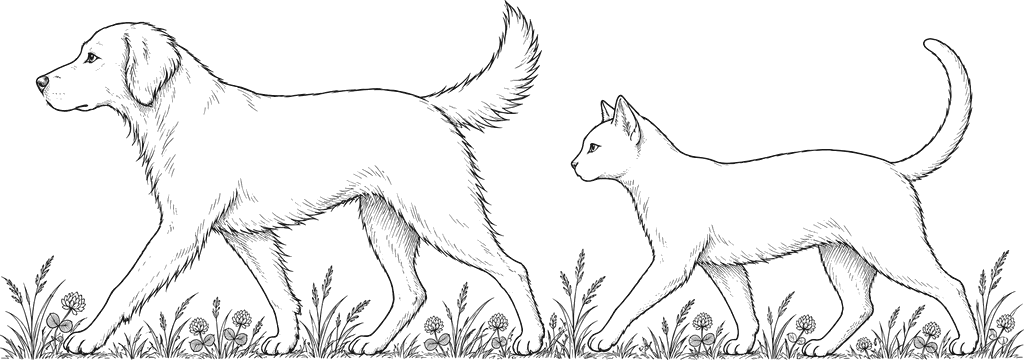
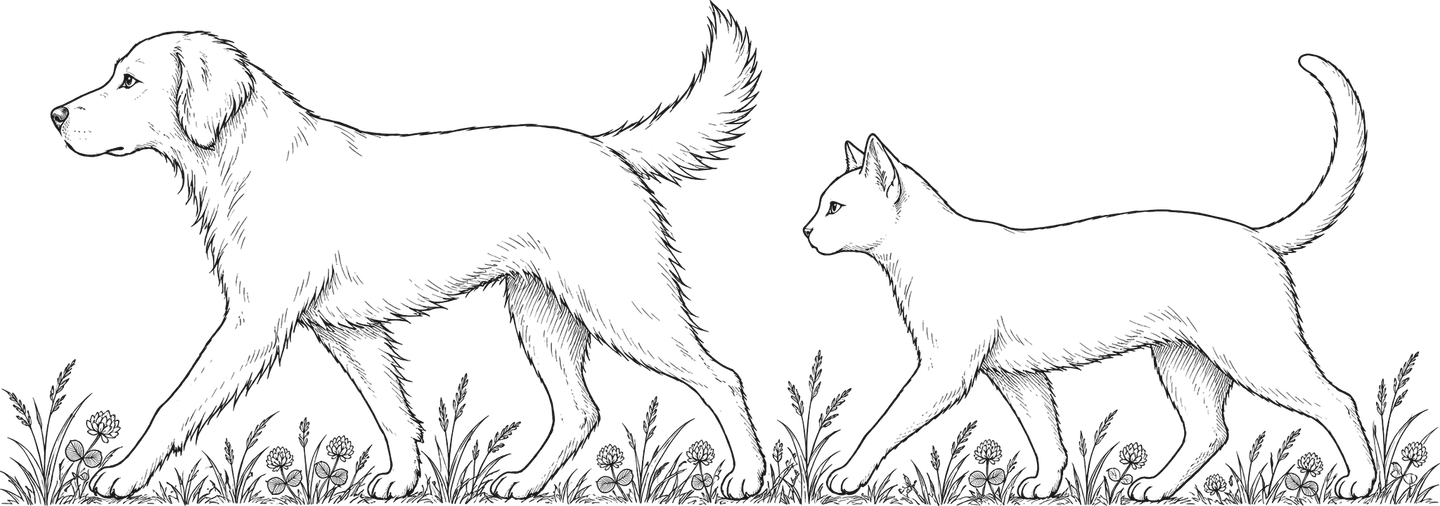
Companion animals
Two guts in one home. In dogs, faecal microbes and fermentation products shifted within days of an abrupt diet change, then levelled off.
Explore companion animals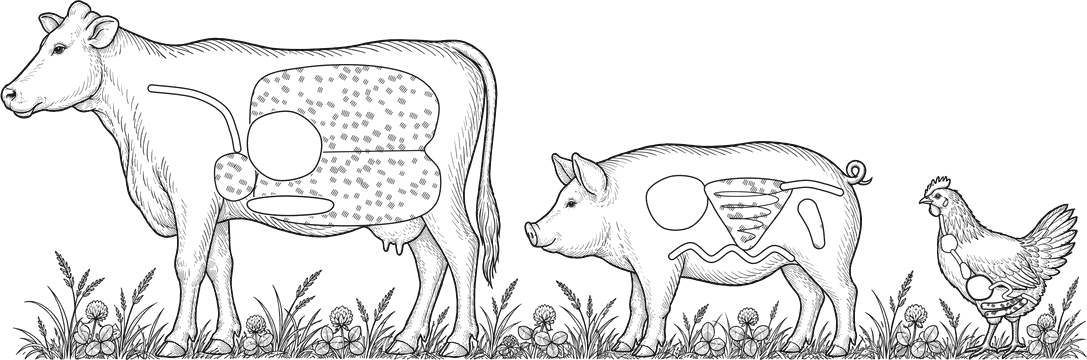
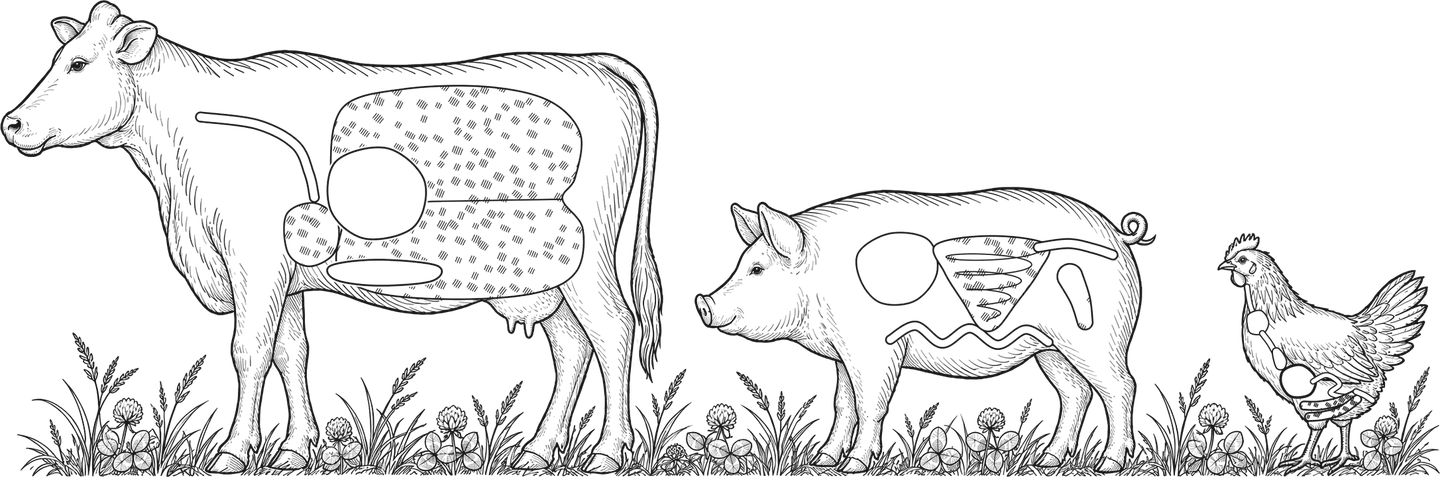
Livestock
Rumen, hindgut and caeca: cattle, pigs and poultry each ferment their feed in a different place.
Explore livestock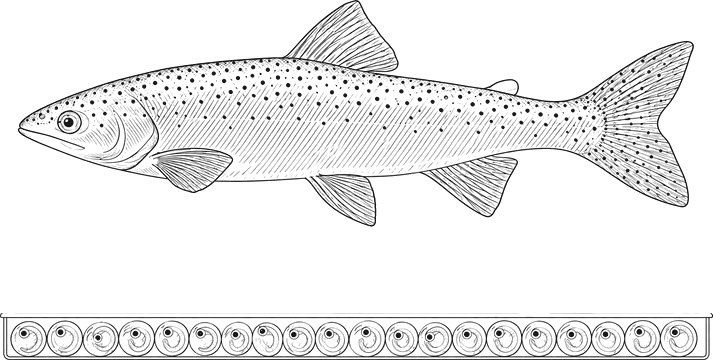
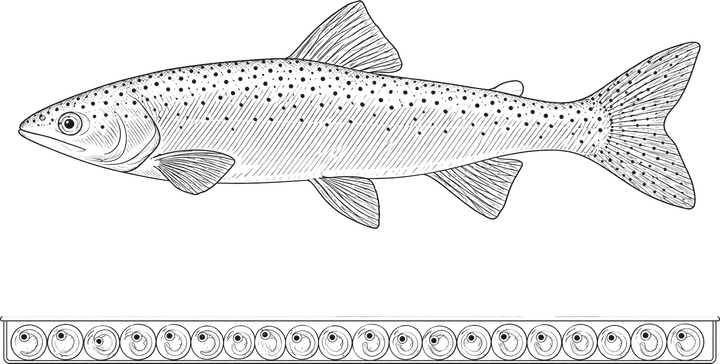
Aquaculture
Rainbow trout, from incubation tray to tank: one study in the water, one in the feed.
Explore aquaculture
Humans
The large intestine and its microbial community, read the same way as a root zone or a rumen.
Explore humans
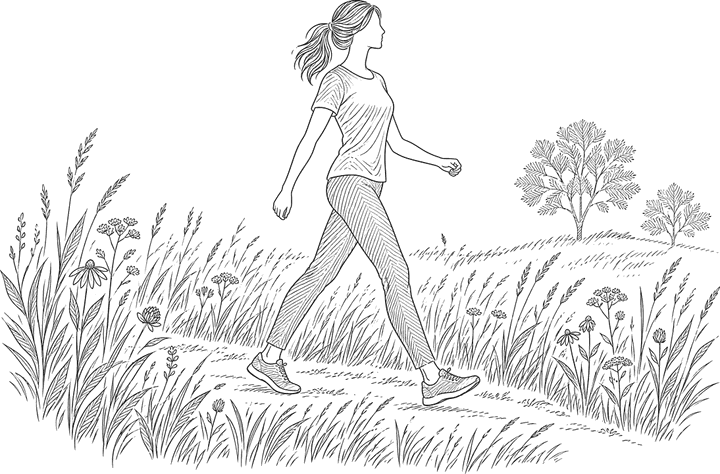
The planet
The world’s soils hold more carbon than the air and all the world’s plants together.
Soil organic carbon is the carbon contained in soil organic matter; humic and fulvic are fractions a laboratory extracts from part of that matter. The size of this ledger is why the project asks what those fractions do in soil. It does not show what adding them does.
Leonardite, the source of several preparations in this library, is old carbon moved from one place to another, not carbon taken from the air.
Carbon held, in billion tonnes
- Atmosphere about 870279 of it added since 1750
- Vegetation about 450
- Soils outside the permafrost region 1,700
- Permafrost 1,200
Evidence library
What the research shows.
Every finding is kept with its setting, its limits and its funding, and the null results stay beside the positive ones.
Across 81 studies, humic substances raised early plant growth on average, with wide variation.
Pooled estimates showed shoot and root dry weight increases of about 20 percent, yet about half of the shoot studies found a gain of less than 5 percent.
Limitation. Mostly short, early-growth experiments; few statistically rigorous field trials through to crop maturity.
Funding. Funders include coal-sector research bodies.
Rose et al., 2014
Read the evidenceA humic product raised maize yield only on eroded upland soil in drier seasons.
No field-wide yield effect appeared in any of four site-years; significant gains of 7 to 19 percent appeared only on upland soil, mostly in drier seasons.
Limitation. The link to weather rests on correlation and was not tested directly; significance was set at P < 0.10.
Funding. Industry and USDA-ARS funding; two authors worked for the product’s maker.
Olk et al., 2021
Read the evidenceHumic acid in incubation water was followed by higher hatch survival in trays, but not in jars.
In stacked trays, fungus was absent and survival to hatch was higher with humic acid; in jars, survival did not differ.
Limitation. The tray and jar results differ, and bacterial communities were described by relative abundance in water, not by load.
Funding. Manufacturer-funded study. Funded by the product’s manufacturer, which also supplied it.
Chiasson, Kirk and Huyben, 2023
Read the evidence
Open questions
Where the evidence in this library stops.
Four questions this project pursues, each stated where the evidence stops, which is where the next work is.
Does the carbon in a fulvic material feed the microbes living inside a plant?
Treatments have shifted those communities in stevia leaves and tomato roots. No study in this library has traced the carbon.
Which parts of a humic or fulvic material do soil microbes use as carbon, and how much?
In one low-organic-matter soil, humic acid raised microbial respiration. Stable-isotope probing is one method that could answer it.
Does adding humic or fulvic material leave soil holding more carbon than the material itself brought?
No study in this library has measured it. An application record is not sequestration.
Can a humic or fulvic feed preparation lower the methane cattle produce?
Methane is made by microbes in the rumen, which makes it a framework question. Answering it takes a controlled trial that measures methane in the animal, and it is one this project intends to run.
The publication series
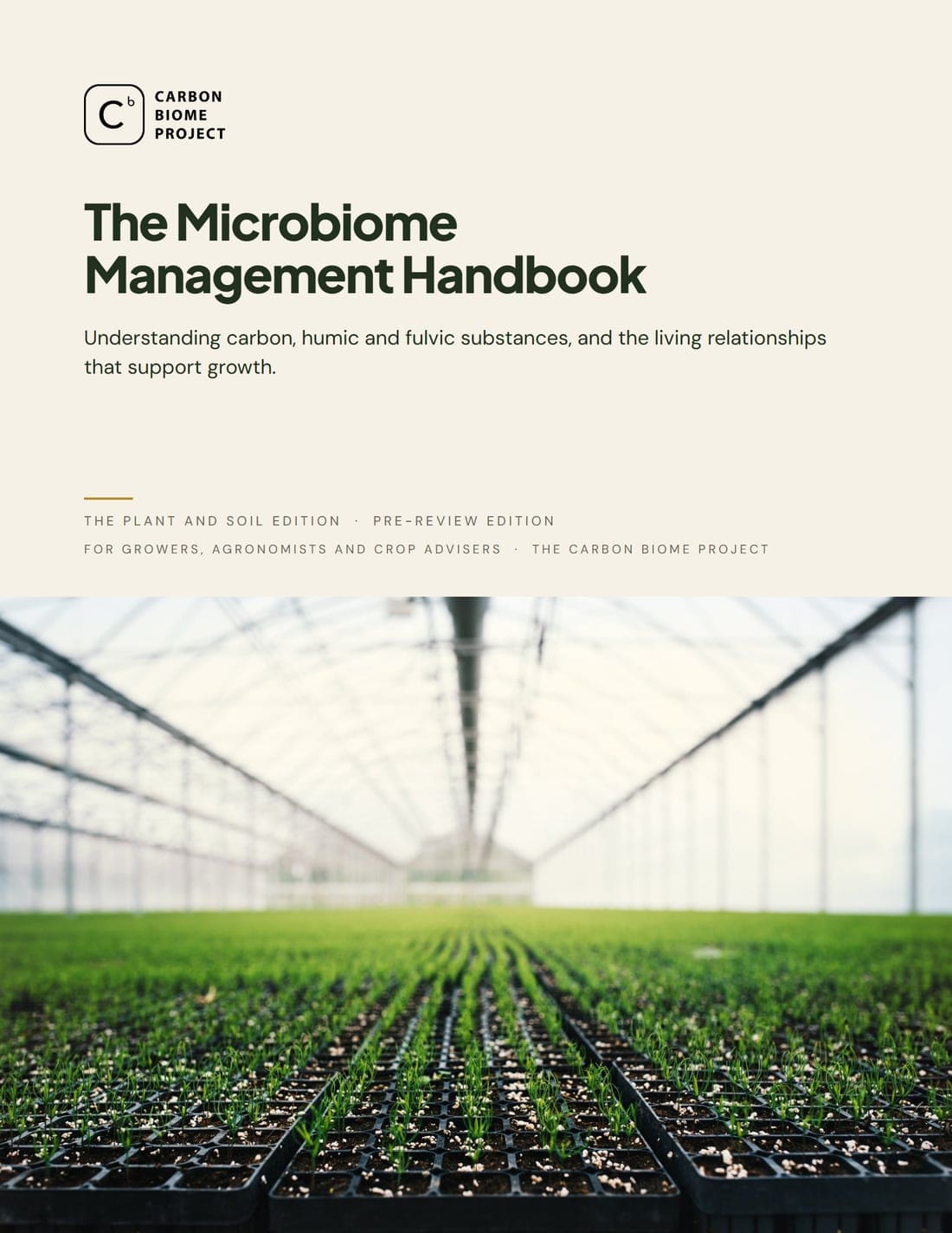
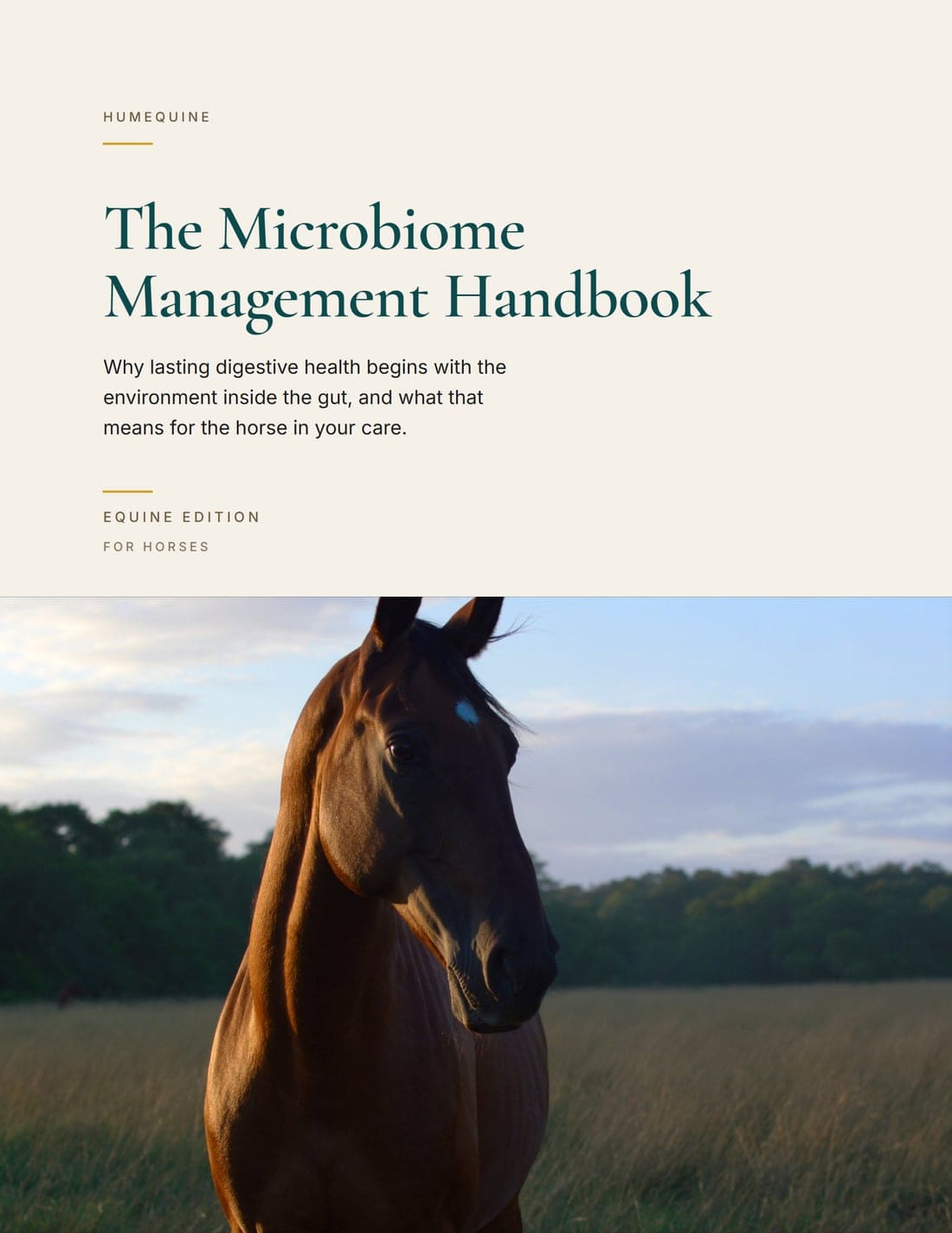
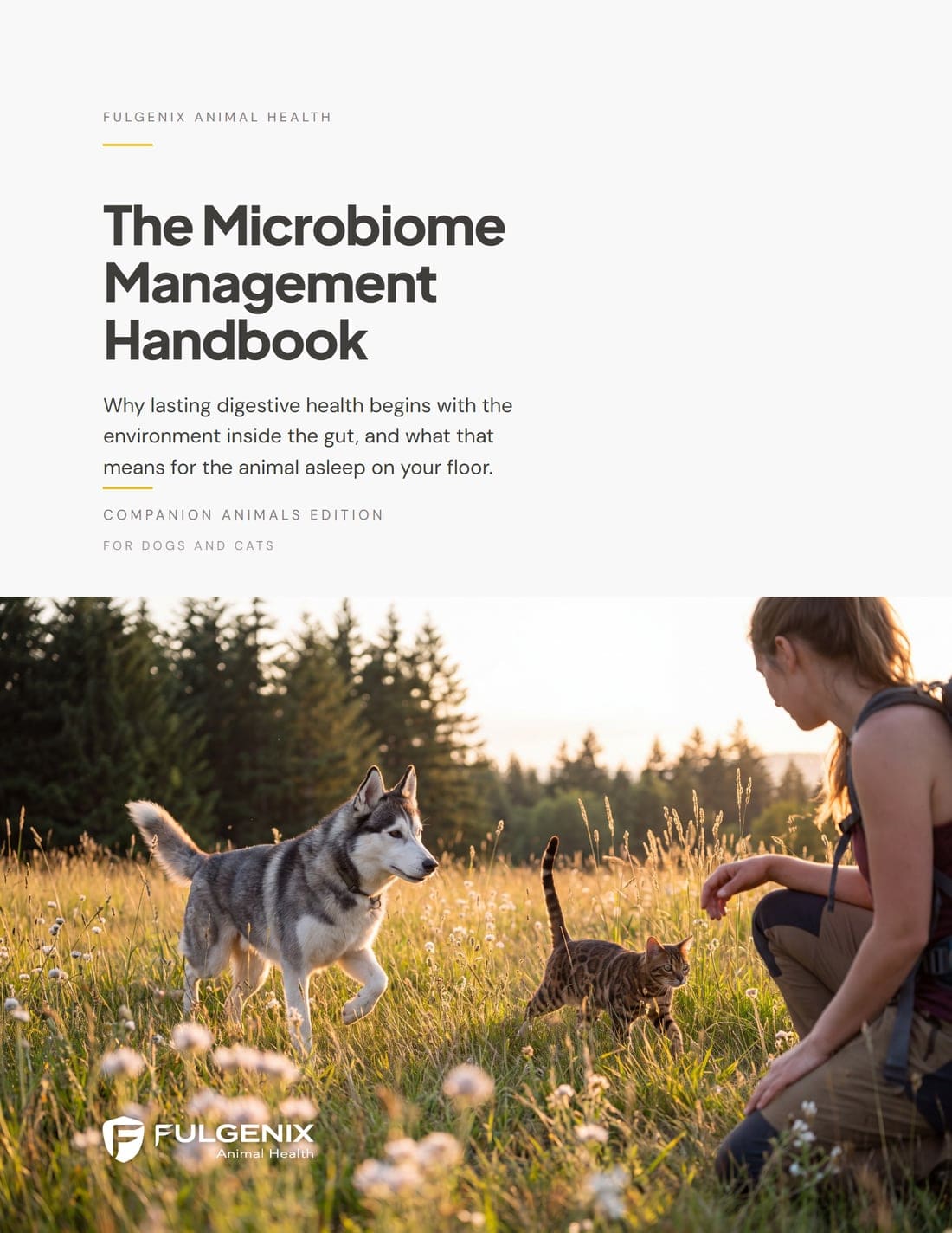
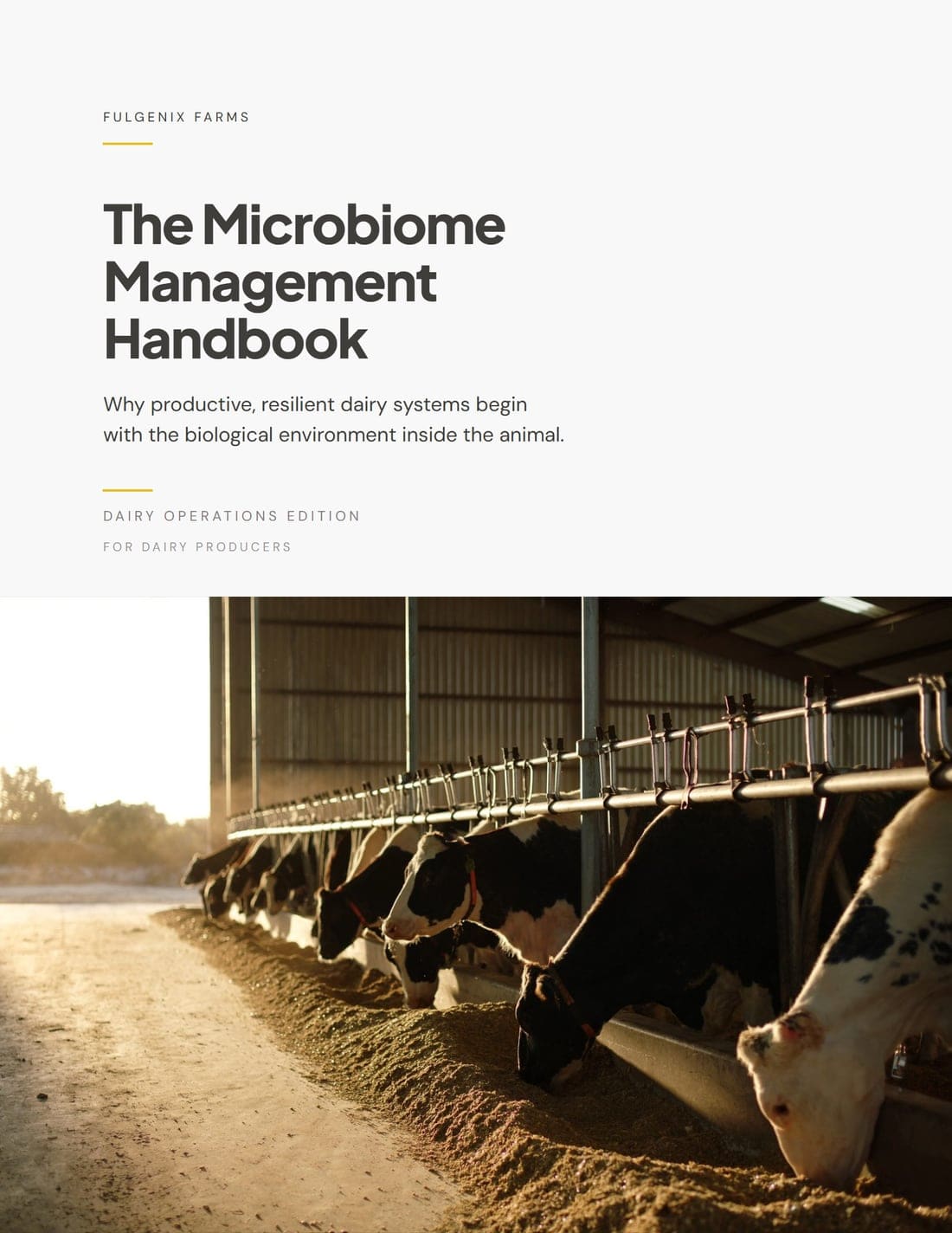
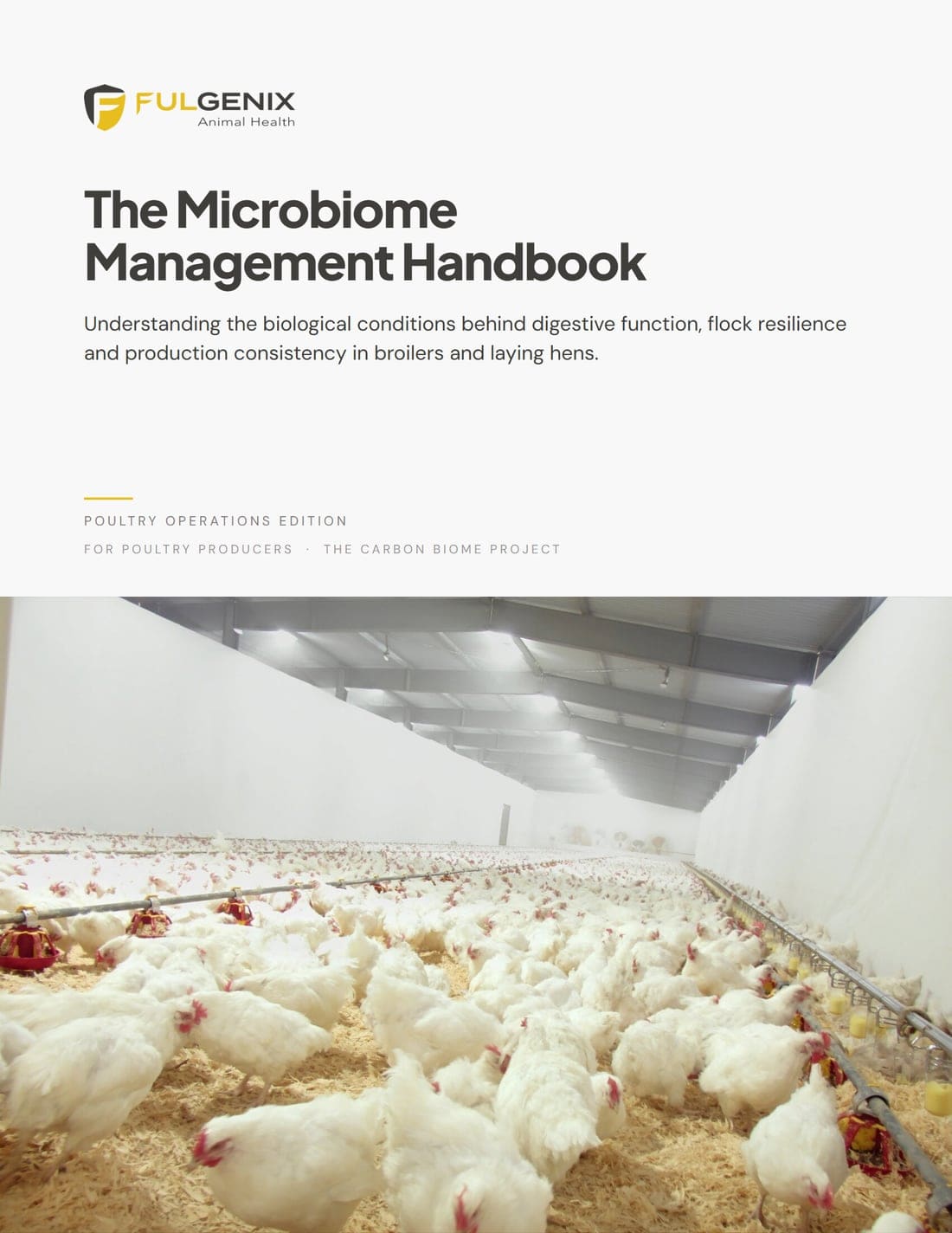
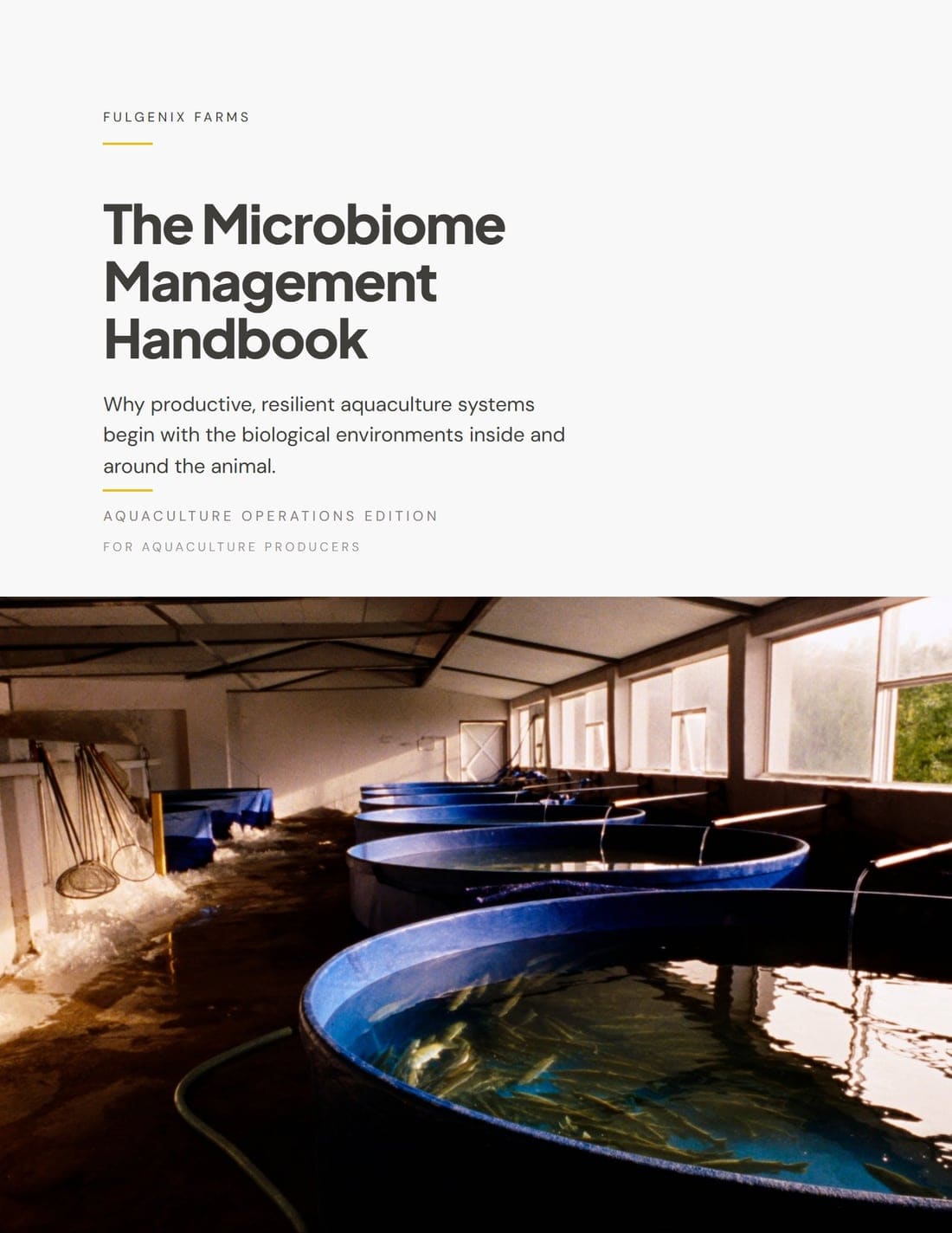
Guides and handbooks, one living system at a time.
Each edition follows organic matter into one living system.
Every guide and handbook is coming soon. Join the waiting list for yours.
About the project
Advancing Microbiome Management across living systems.
Carbon Biome Project publishes the Microbiome Management Framework, keeps an evidence library and prepares the reference works that apply both. It follows what living things leave behind, through the ground and the plants it grows, to the animals and people who eat them.
Professional review is open in every living system the framework covers.
The founders’ commercial relationships with five brands are disclosed in full.
Associated brandsFollow the work
New editions. New evidence records. Revisions.
An occasional note when a publication, the evidence library or the framework is added to or revised.
From Carbon Biome Project. Unsubscribe at any time.