Coming soon · Humequine
The Microbiome Management Guide
Equine Edition
Why lasting digestive health begins with the environment inside the gut. A short introduction for horse owners, trainers and barn managers.

Microbiome Management in horses
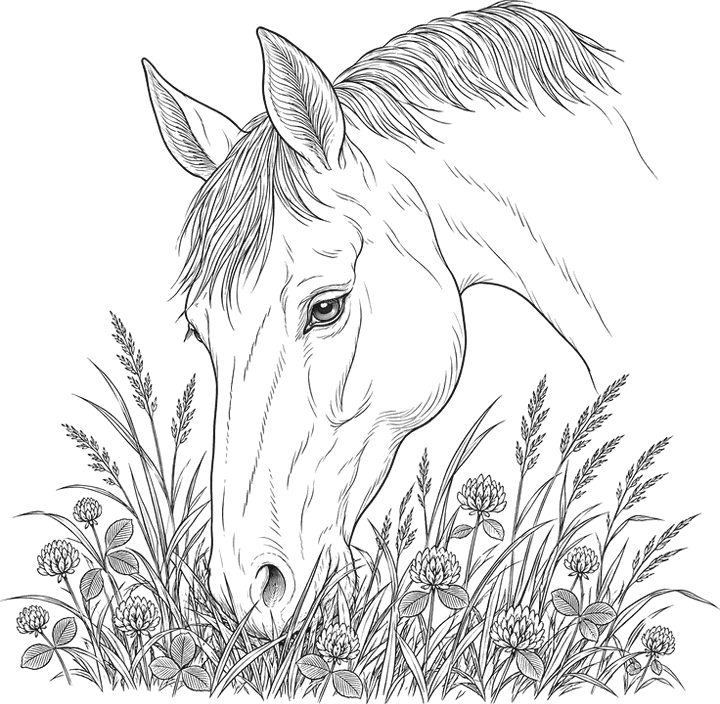
A horse at grass is eating mostly fibre, and much of it the horse cannot break down alone. Microbes in its hindgut ferment that forage, in a caecum that holds about three times the volume of its stomach.
Seen and unseen
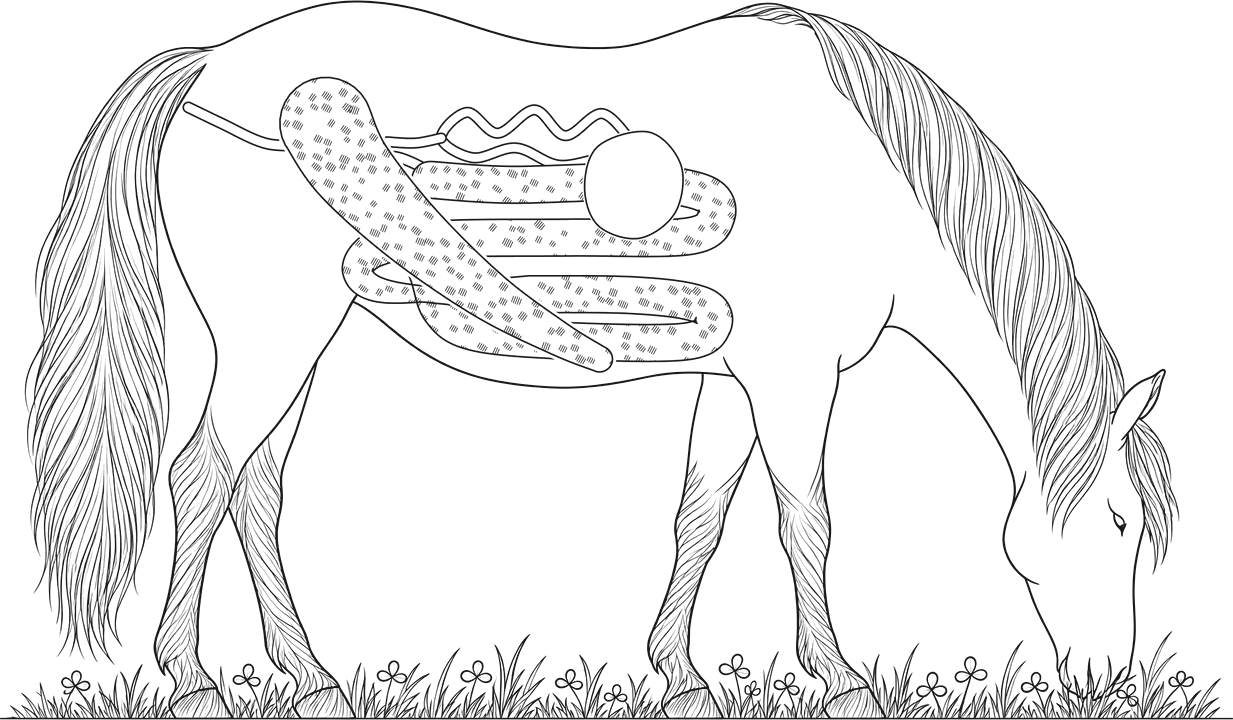
A horse at grass, and the hindgut behind its ribs: a caecum of 27 to 30 litres against a stomach of 8 to 10, and the large colon, where microbes break down the fibre the horse eats.3
Resources, physical conditions and management.
Functions and interactions within the community.
What can be measured in the host or wider system.
The large colon
Observable function Manure consistency and body condition score
Why this system is investigated. The hindgut is a fermentation environment the horse depends on, and anything added to feed meets those microbes before it meets the horse.
That raises an equine question of its own: whether a humic or fulvic preparation is used by particular hindgut microbes, or acts on their environment another way, and what an owner would then see in manure, appetite and condition. This library holds no study of a humic or fulvic material in horses, so the work starts from a baseline.
Why the setting matters
Pasture or hay should make up most of what a horse eats: for most mature horses at least 1 percent, and ideally 1.5 to 2.5 percent, of body weight in forage each day.1 The horse relies on microbes in its hindgut to process that forage, which is why horses are called hindgut fermenters. What the horse eats is also what those microbes live on.1,3
Grazed
Fresh grasses and legumes, eaten where they grow.
Harvested
Forage cut, dried and stored, fed when grazing is short or unavailable.
Conserved
Another stored forage. The equine study below compared ponies kept on hay or on haylage for years.5
Simplified equine digestive anatomy. Caecum and stomach drawn to the Merck volumes; the rest not to scale.3
Small for the animal: about 8 to 10 litres.
A major site of enzymatic digestion and nutrient absorption.
About 27 to 30 litres, part of the hindgut’s microbial fermentation environment.
A major region of continued fermentation and absorption.
The later passage of digestive contents toward elimination.
The hindgut is important, but it is one part of the digestive system. What leaves the horse as manure has passed through every compartment, so it cannot give a complete picture of any one of them.
What is happening here
Within the equine framework, Digestive Stability describes appropriate digestive function and the capacity to adapt through change.
The focus is the individual horse’s pattern over time, considered alongside feeding, management and professional assessment.
What is usual for this horse, and which observations deserve attention?
How do observations change through a transition in feeding, routine or circumstances?
Following a disruption and any necessary care, does function move back toward the horse’s usual pattern?
Digestive Stability is a working concept within the framework. It is not a diagnosis, a guarantee of symptom-free health or evidence that the microbial community has remained unchanged.
The forage changes from hay to fresh pasture, introduced gradually, with turnout time recorded.
Not visible from the yard. Research measures it by sampling, as in the forage study below.
Appetite, water, manure and body condition, against this horse’s own baseline.
What an owner can follow
You have to know what is normal for a horse before you can recognise what is not.6 A simple record, kept the same way before, during and after a change in feeding or routine, gives the horse’s own baseline to compare against.
For a period before any change, note forage and feed, turnout and work, appetite, water, manure and body condition, the same way each day. This is what normal looks like for this horse.6
Write down what changed and when. Feed changes are best made gradually: replacing 20 to 25 percent of the current hay or grain every other day, so a full change takes a week or more and the hindgut microbes have time to adjust.1
Keep the same observations, recorded the same way, so that a difference reflects the horse rather than a new way of looking.
Travel, competition, housing, weather, dental or veterinary care and other supplements. Any of them can coincide with a feeding change, and each belongs in the record.
Observation does not replace veterinary assessment. Contact your veterinarian promptly for suspected colic, significant diarrhoea, reduced appetite or other concerning changes. Do not wait for a supplement trial to assess an unwell horse.6
What is established, and what is being investigated
What is known about the horse’s hindgut comes from equine research on forage, anatomy and microbes. What a humic or fulvic material does in a horse is a separate question, with its own evidence to find.
Research involving 20 Welsh Mountain ponies examined hay and haylage feeding. The investigators reported clear differences in urinary metabolites, and differences in some faecal bacterial groups but not in faecal bacterial diversity.
Limitation. One group of ten ponies per forage, so forage is confounded with group, pens, paddocks and grass source; forage composition was not reported.
Funding. The Laminitis Trust via Equi Life Ltd, which the corresponding author owns.
Interpretation. The work illustrates why feeding context matters when examining microbial observations. It did not test a humic or fulvic preparation or establish a universal target microbiome for horses.
In this collection. One background record for horses, and no study of a humic or fulvic material in a horse.
Findings from soil, poultry or trout do not answer the equine question; the horse’s hindgut is its own environment.
Identify the preparation, composition, route and study exposure.
Distinguish digestive observations, microbial measurements and other outcomes.
Consider whether the design can separate the preparation’s effect from diet, management and other influences.
Forage already supplies substrates for hindgut fermentation. Whether an additional preparation is directly used by particular microbes, or influences the environment through another interaction, requires its own evidence.
What to document about a horse’s feeding, routine and digestive observations, so that a change can be read in context.
When reviewing digestive function, document the feeding program, routine and recent transitions. This context helps frame the question before attributing a change to a particular cause.
Record forage type and batch, pasture access, concentrates, supplements and feeding pattern.
Record transport, competitions, changes in turnout, housing and daily schedule.
Consider age, workload, body condition and relevant dental or veterinary history.
Record treatments, professional recommendations and other changes that occurred during the observation period.
These are areas to document, not a checklist for diagnosing the cause of a digestive concern.
Consistent observations can support a more useful discussion with the people responsible for the horse’s care. Record what changed, when it changed and what else was happening.
| Area | What to document |
|---|---|
| Feeding | Forage, pasture, concentrates, supplements and recent changes. |
| Appetite and water | Changes from the horse’s usual pattern, distinguishing observation from measured intake. |
| Manure | Consistency, frequency and any separately observed liquid, recorded consistently. |
| Body condition | Trends using an appropriate, consistent assessment method, with hands on the horse rather than by eye from a distance. |
| Routine | Travel, exercise, turnout, housing and schedule changes. |
| Care | Veterinary assessment, treatments and other concurrent interventions. |
Where to learn or contribute
Coming soon · Humequine
Equine Edition
Why lasting digestive health begins with the environment inside the gut. A short introduction for horse owners, trainers and barn managers.
Review a publication, interpret a record, or help design the baseline observations an equine study of these materials would need. This collection holds none yet.
Associated brand. Humequine, run by the project’s founders, sells products for horses. No study on this page tested a Humequine product.
How the project relates to its brandsPrepared by Carbon Biome Project, 19 October 2026; revised 22 October 2026. External scientific review of this page has not been completed. Citing the University of Minnesota, the University of Surrey and the Merck Veterinary Manual does not imply their endorsement of the project.